CONFERENCE
Hackathon
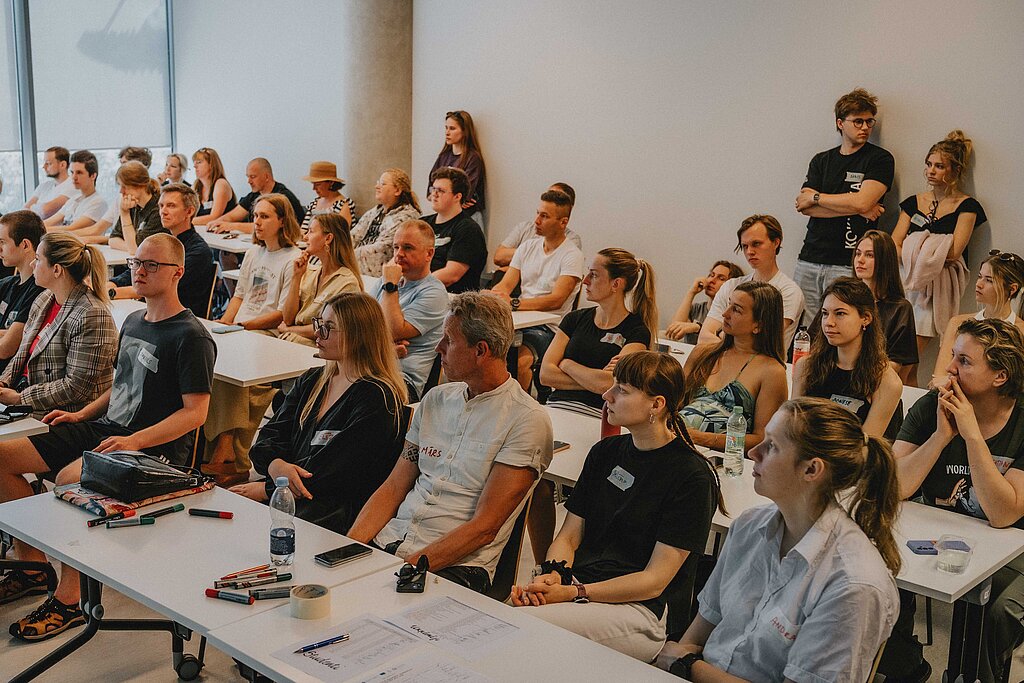
A hackathon is a thematic event lasting between 24 and 72 hours, during which students form teams to address challenges relevant to industry or society. Each hackathon focuses on strategically important areas such as artificial intelligence, educational technologies, and internal and external security. The aim of the event is to promote interdisciplinary collaboration by creating new concepts, approaches, or prototypes that can later be further developed within pre-incubation programmes.
At the beginning of the hackathon, idea owners present their concepts, and participants form teams. During the event, teams receive support from experts and mentors – industry professionals and representatives of the academic community provide guidance on idea development, technological implementation, user research, business models, and presentation skills. Teams also have access to LU OpenLab resources for prototype development, such as 3D printers and a laser cutter. The event concludes with presentations to a jury, which evaluates the results achieved.
Benefits for students:
Practical experience – The opportunity to develop new concepts or prototypes within 24–72 hours.
Mentor support – Access to guidance and consultations from industry professionals and academic experts.
Resources and infrastructure – The opportunity to use LU OpenLab resources for prototype development.
Prizes and scholarships – The best teams receive one-off scholarships for top placements.
Further development – The opportunity to continue developing ideas within the pre-incubation programme.
Hackathons are planned to be organised regularly, each time focusing on different thematic areas. This will foster students’ innovation potential and strengthen the innovation ecosystem. Solutions identified during the hackathon can be further developed in collaboration with companies or organisations that have proposed the challenges, thereby creating real collaboration projects and internship opportunities.
The event is organized by the University of Latvia Innovation and Acceleration Center within the ERDF co-funded project No. 1.1.1.7/1/25/A/005 “Innovation Grants for Students of the University of Latvia.”
On 15 November, the six-week Cultural Data Visualisation Hackathon concluded at the National Library of Latvia (LNB), where teams developed data stories based on interactive Power BI visualisations using datasets from the Digital Library and art criticism collections. The main prize of the hackathon was awarded to the innovative team of programmers and cultural heritage researchers “Pass de stress”.
The cash prize provided by the Latvian Open Technology Association and the company ZZ Dats was awarded to the team Pass de stress for their project “Woman as Creator”, while the Normunds Naumanis Society (NNB) special prize went to the team Dālijas for their project “Golden Award of Art Criticism”.
The strong Pass de stress team consisted of Ilze Krišlauka, Dina Zobena, Zane Krūmiņa, Zane Grudule, Katrīna Kūkoja, Eva Eglāja-Kristsone, and Ieva Vīvere, bringing together expertise from multiple fields – data analytics, programming, Power BI skills, and in-depth knowledge of the cultural heritage sector. Their winning project, “Woman as Creator”, used Digital Library content data to create an overview of the representation of women as authors within this cultural heritage repository. The team found that women are identified as authors in 18.4% of the 642,040 cultural heritage objects. As the authors of the project note, “while men’s work has often left monumental traces, women’s creative output is more fleeting, delicate, and subtle, yet no less significant. Historically, it has more often emerged in everyday contexts rather than the public sphere, which also explains the statistical imbalance. Nevertheless, women are present in nearly all fields — literature, periodicals, music and sheet music publications; visual arts, photography, applied arts; archival documents, posters, sound recordings, as well as contemporary digital content.” In terms of the number of objects, both well-known and lesser-known names appear – for example, the photographer Marta Pļaviņa from Skrīveri has the highest number of objects.
The team Dālijas – Ruta Beināre, Kārlis Kanders, Anete Saulīte-Stačkune, Marta Kivkule, Matīss Bolšteins, and Sandija Dzērve – analysed data from 11,356 reviews published between 2015 and 2025 in their project “Golden Award of Art Criticism”. They identified the most prolific critics, lifetime achievement figures, rising stars, and the most diverse platforms. For instance, in literature, Bārbala Simsone authored the most reviews over the ten-year period; in visual arts – Aiga Dzalbe; in theatre – Atis Rozentāls; in music – Armands Znotiņš; and in opera – Jegors Jerohomovičs. The platform recognised as the most diverse was the online magazine Satori – this metric was determined using the Shannon diversity index, which helps balance the dominance of a single author’s perspective, often observed in cultural media that regularly publish reviews.
The Cultural Data Visualisation Hackathon was organised by the National Library of Latvia in cooperation with the LU Innovation and Acceleration Centre (LU IAC). Supporters included LATA, ZZ Dats, Scandic Fusion, the Normunds Naumanis Society, and Datu skola. The National Library of Latvia extends special thanks to data analysts Alīna Drazdovskis and Aivis Brutāns from Scandic Fusion, Emergn Latvia leader and University of Latvia researcher Aldis Ērglis, Chairman of the Board of LATA Rolands Strazdiņš, Chairman of the Board of the Normunds Naumanis Society Ingus Bērziņš, Director of LU IAC Gunita Deksne, LU IAC Project Manager Krista Lotko, mentors Rita Žuka, Juris Krasts, Mihails Korčevskis, Agate Jarmakoviča, Artūrs Žogla, Iveta Andersone, Aigars Mačiņš, Pēteris Jurčenko, as well as lecturers Karina Stankeviča and Olga Sozinova from the University of Latvia Bachelor’s programme “Cultural Environment Heritage Research and Protection”.
The event was financially supported by the State Research Programme “Digital Humanities” project “Development of an Open and FAIR-Compliant Digital Humanities Ecosystem in Latvia” / DHELI (No. VPP-IZM-DH-2022/1-0002) (2022–2025).
From 17 to 19 October, the “Student Defence Hackathon”, organised by the LU Innovation and Acceleration Centre, took place at the University of Latvia’s House of Nature. During the event, students from Latvian higher education institutions developed innovative solutions to challenges in the defence sector. First place and a scholarship of EUR 3,000 were awarded to team “Celeste” for their plug-and-play backup solution for existing navigation systems used by the majority of unmanned aerial vehicles.
Following the win, a representative of the Celeste team commented: “Thank you to the participants, the jury, my teammates, and everyone who believed in us! There is still a lot of work ahead, but we will do everything possible to bring this project to life!”
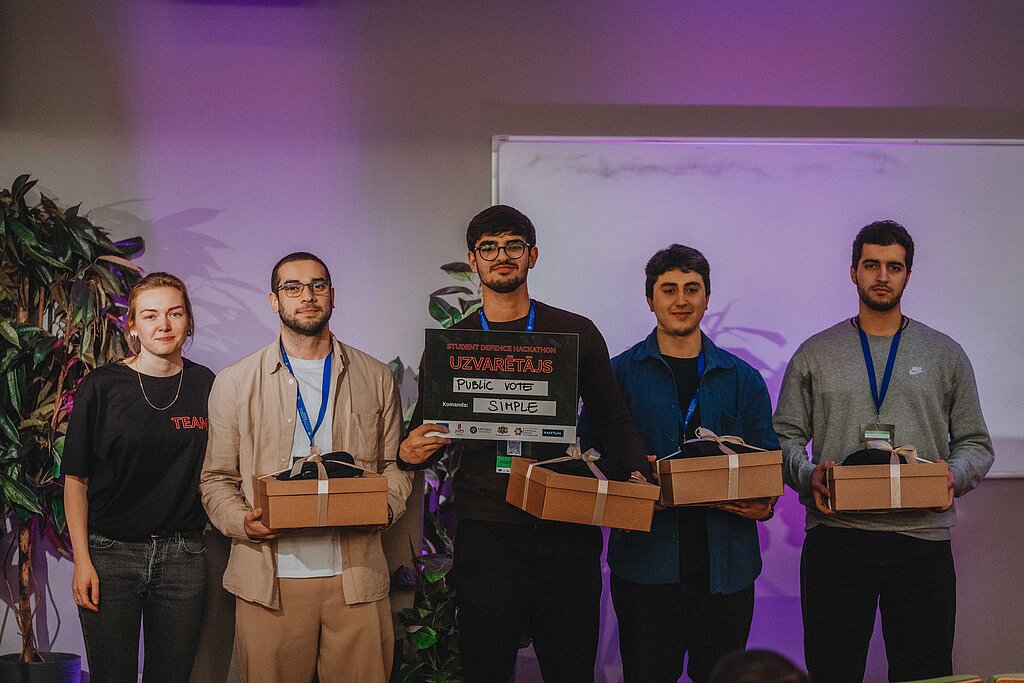
Second place and a scholarship of EUR 1,500 were awarded to team “Sprīdītis”, which developed a short-range emergency/backup communication device, while third place and a EUR 500 scholarship went to team “OdoLINK” for their solution enabling drones to be interconnected. The Audience Choice Award was won by team “Simple”.
In total, 20 teams participated in the “Student Defence Hackathon”, of which 13 were selected by mentors to present their developed solutions in the final stage, demonstrating both technical ingenuity and a strong understanding of defence sector needs.
The students’ ideas covered a wide range of topics – from enhanced military mobility to energy-efficient and secure technologies for operation in challenging environments. Solutions included, for example, secure communication and data transmission without GNSS, coordination of autonomous devices and drones, detection of mines and other threats using artificial intelligence, as well as portable energy systems and sensor networks for battlefield conditions.
Teams developed both technical prototypes and software solutions aimed at making defence processes more efficient, secure, and sustainable. Through their creativity and determination, the teams demonstrated that innovative ideas can become real-world solutions and contribute to the development of the defence sector.
The hackathon jury consisted of four experts – Gunita Deksne, Director of the LU Innovation and Acceleration Centre; Kārlis Bērziņš, CEO and co-founder of SUBmerge Baltic; Māra Ūbele, Senior Expert at the Innovation and Research Policy Division of the Defence Industry and Innovation Policy Department of the Ministry of Defence; and Andis Zeltiņš, Lead Mechanical Engineer at Origin Robotics – who evaluated the students’ work based on their knowledge and experience.
The LU Innovation and Acceleration Centre extends its gratitude to all participants, mentors, jury members, and partners of the “Student Defence Hackathon” for their support, time, energy, and contributions.
The “Student Defence Hackathon” was organised by the LU Innovation and Acceleration Centre in cooperation with the youth organisation “The Raccoons”. The event was supported by the Ministry of Defence.
The event is organized by the University of Latvia Innovation and Acceleration Center within the ERDF co-funded project No. 1.1.1.7/1/25/A/005 “Innovation Grants for Students of the University of Latvia.”


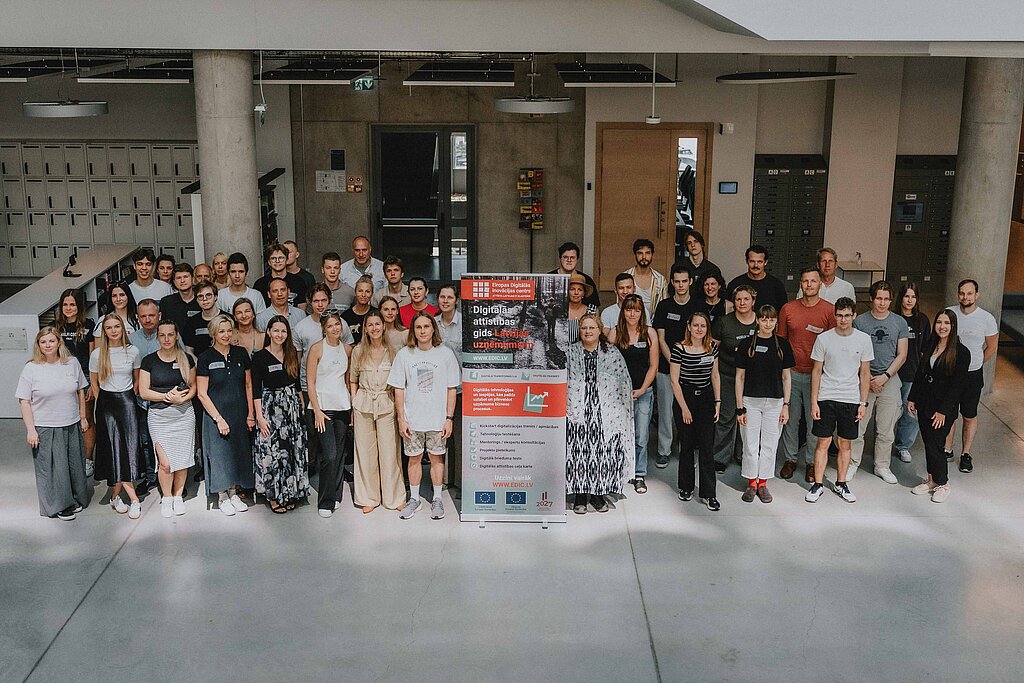
From 14 to 17 July, the “CoLab: Digitalisation” hackathon organised by the University of Latvia (LU) took place at the guest house “Vecmuiža”. During the event, 28 students from various study programmes formed teams to develop solutions to the digitalisation needs of 27 Latvian companies over the course of three days.
“CoLab: Digitalisation” is more than just a hackathon – it is an intensive idea development camp where students, together with mentors and industry experts, tackle real business challenges, developing digital solutions from concept to prototype. The event began on 14 July in Riga, where students were introduced to company challenges and formed teams, and continued at the Vecmuiža guest house, where three days of intensive work, mentoring sessions, practical workshops, and team-building activities created an environment for both professional growth and meaningful connections.
“It is truly inspiring to see how the energy and knowledge of young people, combined with real-world challenges, can result in digital solutions that genuinely transform everyday business operations. ‘CoLab: Digitalisation’ is not just a hackathon – it is a starting point for future innovation and collaboration between academia and industry,” emphasised hackathon organiser Katrīna Buša.
At the end of the hackathon, teams presented their solutions to the jury, which particularly recognised three teams – APPiņi, 3+1, and Studenti entuziasti – sharing a total prize fund of EUR 1,500 for their innovative, practical, and well-developed digital solutions.
The jury consisted of four experts – Gunita Deksne, Director of the LU Innovation and Acceleration Centre; Maksims Inpuškins, mobile application developer at Chili Labs; Luīze Dārta Sietiņa, COO of TechChill and co-founder of The Crowd; and Jurijs Jastržembskis, Lead Expert in Technology and Innovation Transfer at the LU Innovation and Acceleration Centre – who used their knowledge and experience to evaluate the best solutions.
The hackathon prize fund was provided through donations from patrons of the LU Innovation and Acceleration Centre, administered by the University of Latvia Foundation.
Throughout the hackathon, students were supported by five dedicated and experienced mentors. They asked the right questions, encouraged and challenged participants, and helped guide teams towards functional solutions. Special thanks to Artis Daugins, Madara Meiere, Luīze Dārta Sietiņa, Maksims Inpuškins, and Kristaps Cīrulis for their energy, time, and valuable insights.
The “CoLab: Digitalisation” hackathon was organised by the LU Innovation and Acceleration Centre. Its organisation was supported by Merrild, Rudy’s Kombucha, Hematogenas Vita+, Cannelle Bakery, Bella, and Red Bull, the University of Latvia Foundation, the Latvian IT Cluster.